







As warmer weather approaches and more people head outside, schools and communities are working to protect students and their families from a possible increase in ICE’s presence in the Bronx. Project Opens Arms, posters in the hallways and whistle protocols are just some of the ways that schools are keeping students and families safe.
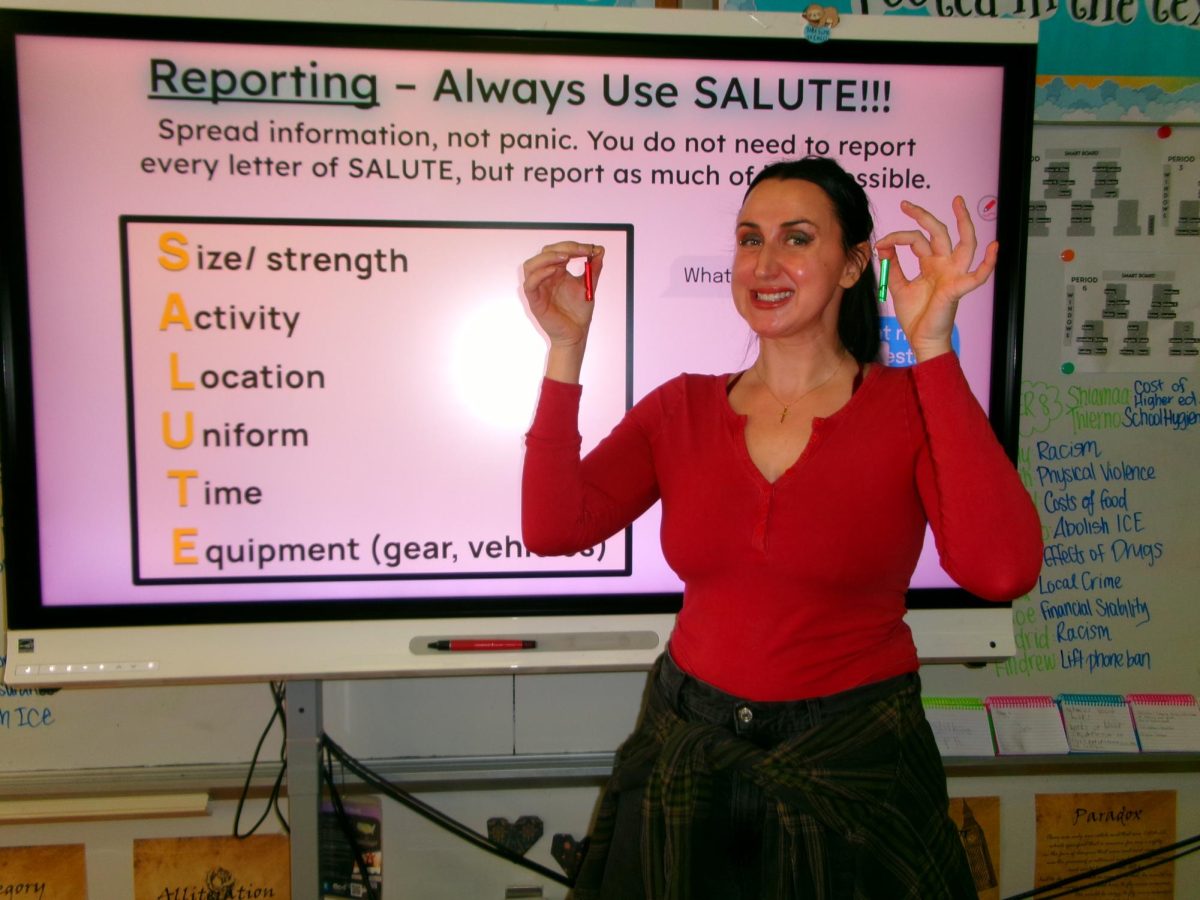
ChristaLea Panzironi, a teacher at Lehman High School, holds workshops to keep teachers informed about sightings of ICE and the proper measures to take.
“ICE is about 20 years old and this system, I don’t know exactly how old it is, but I’ve been aware of the whistle system for some years now, maybe three or four; it could be older than that,” she said. “I think now we’re seeing footage of people on social media that are using the whistle as a general help.”
The general protocol for using the whistle is a unique one: three short whistles are blown if ICE is spotted in the area, and longer whistles are blown when ICE is actively raiding.
Even during the winter, possible signs of ICE worried some. For example, Stephanie DeCicco, a history teacher at BRHS, spotted and reported what appeared to be suspicious activity near the Lehman campus in January.
“When I drove into work that morning, I saw them [officers] standing on the road and as soon as I got into the building I reported it to Mr. Fucheck,” Ms. DeCicco said.
Principal Greg Fucheck informed school safety, but it had already been reported. School safety sent someone to discuss the report with the NYPD.
With the NYPD acting similarly to ICE, it’s hard to differentiate between them. “The NYPD had a traffic stop in front of the diner at Tremont Avenue at the same time,” Ms. DeCicco said. A few blocks down, officers in plain clothes and Kevlar vests labeled “Police” were standing by unmarked vehicles.
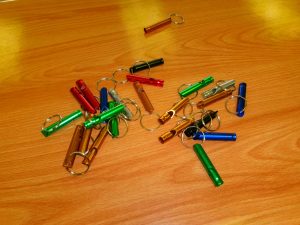
People in the community have created a messaging system so that people can be informed if anyone sees anything suspicious.
Ms. DeCicco also has been hanging up “Know Your Rights” posters in the hallways, and handing out red cards in various languages for students to know their rights and have them on hand.
“I’ve been focusing on my chapter of the UFT (United Federation of Teachers) and how I can support our students,’’ she said. “In earnest, I became aware of the situation when it started to hit national news last year, but then this year a Bronx high school student from another school was detained and I felt that we had to be prepared for that on our campus as well, and that’s when I started with the red cards and posters,” she said. “As chapter leader for BRHS, I bought whistles for my members if they want to take one to use anywhere, not just school.’’
During the sighting in January, Lehman had also taken precautionary measures when they found out it was Homeland Security Investigations.
“They [HSI] sometimes collaborate with NYPD, like gun running, ghost guns, they collaborate with NYPD on a variety of things, but they are an ICE agency,” Ms. Panzironi said.
“If we see ICE, we respond because we don’t know why they’re there,’’ she said. “We responded outside of the building, and word of mouth spread among teachers. Our principal sent a couple of deans out to monitor the situation; we didn’t have a great rapid response.”
It didn’t go well: “Kids were really freaked out,’’ she said. “They had incomplete information or incorrect information, so it seemed like we needed a better response system. I’d love to think that’d be the job of building administrators, but there isn’t a citywide protocol that exists.”
“If ICE comes to our doors, there’s a protocol, but that isn’t what ICE is doing,’’ she said. “They’re kidnapping people at pick-up drop-off times. If they come to the school building, the protocol is that we don’t let them in and we contact our legal team to figure out if we are legally obligated to let them in,” she said. “If they have a valid judicial warrant, we are instructed to open the doors for them. But I don’t think that that’s the case. We had a few students be kidnapped by ICE in the last year and it was pick-up/drop-off time.”
Trista Norton, a biology teacher, believes that it is every teacher’s responsibility to unite and protect students.
“As an educator, we kind of do feel protective over our students and just want to make sure that they are safe and heard and informed about things,” Ms. Norton said. “Regardless of politics, I believe that all teachers should work together to make school a safe place for everybody.”
Project Opens Arms, a DOE initiative, also is working to aid students and families. The initiative works to make sure that all staff can recognize ICE and other non-local law enforcement, and follow the correct protocol. The project also ensures that staff are aware of the most effective ways to respond if students or families are detained.
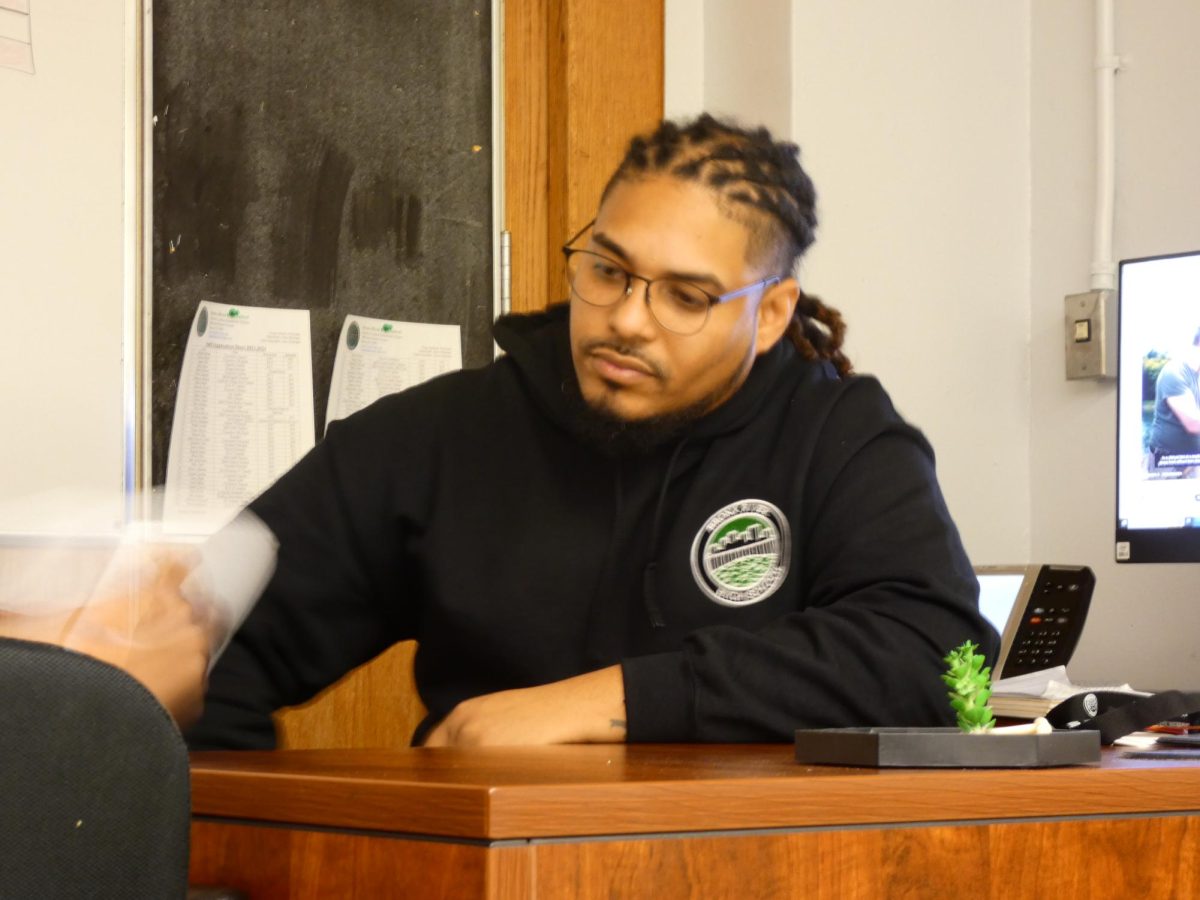
Each school has a point person who cooperates with families and coordinates events for information to be shared. Parent coordinator Wilson Lantigua is BRHS’ point person, and he is regularly in contact with families about important information.
“The Project Open Arms initiative will play a crucial role in making families feel welcome, supported,’’ Ms. DeCicco said. “As the central point of contact they will help students navigate school systems, support their academic and social emotional needs. Schools are also encouraged to attend virtual ‘Know Your Rights’ training,’’
Ms. DeCicco suggests that students should “definitely be mindful of your surroundings; situational awareness is always important in NYC, now more than ever. And knowing the rights that you have, even as a non-citizen. The constitution protects everyone.”
Even so, some students can’t help but worry. A student, whose name is being withheld from publication, shared an experience as someone who is documented, but whose family is not. “I’m the only one in my family who is documented, but it really weighs on me in the small things, like the way my mom warns me to carry my ID everywhere even though I’m a citizen,” the student said. “The rest of my family doesn’t live near me, so I’m constantly worried about their safety because I wouldn’t immediately know if something were to happen to them; they could be taken and I probably wouldn’t be informed until way later.’’
“For my family who is here, I feel like my family would fall apart without any of them. My dad doesn’t go outside, he’s basically indoors almost all of the time,” the student said. “My family has to be outside because they have to work, but when they can they will always carry their IDs and things like pepper spray in case something happens. No matter what we carry, we always feel threatened.’’