




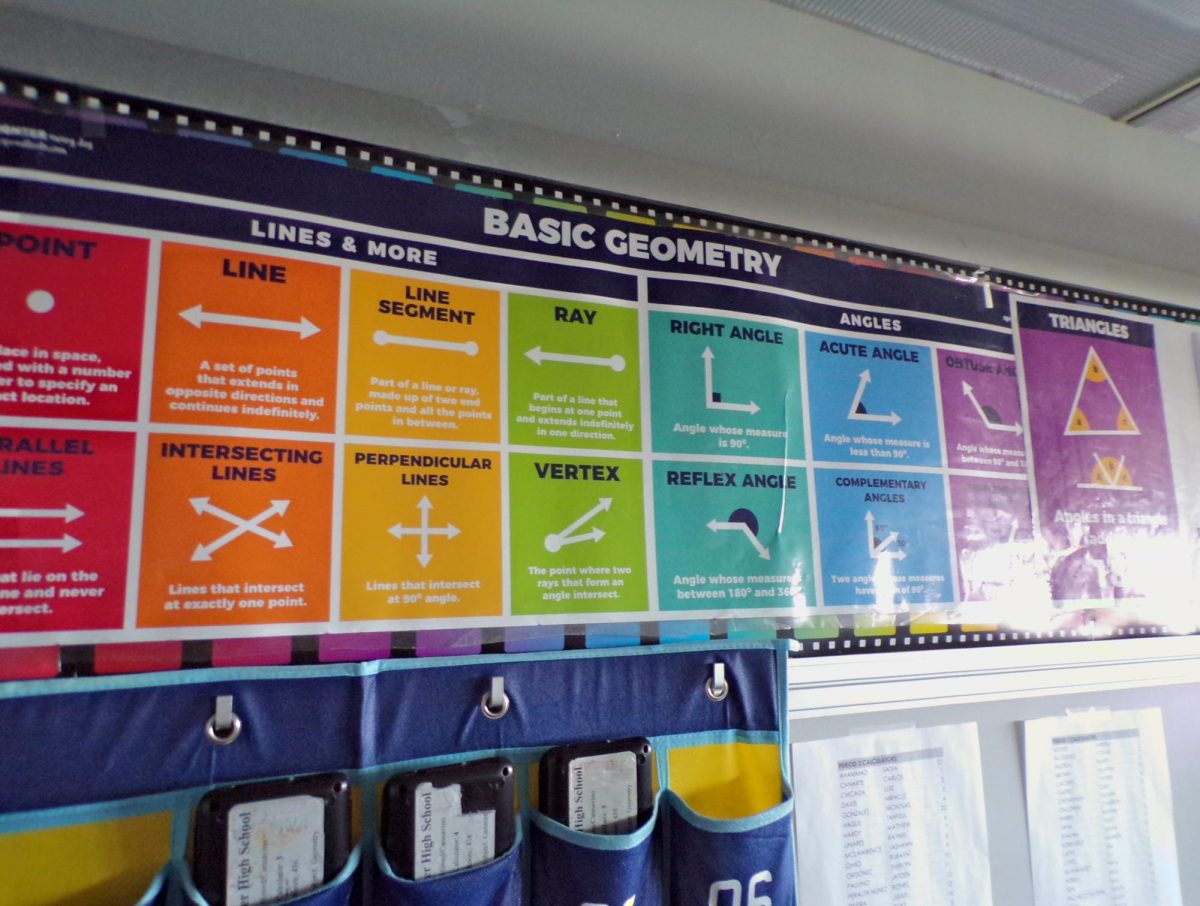

















The NYC Department of Education’s continued focus on a new and at times controversial math curriculum, Illustrative Mathematics, worries students and staff who already struggle to keep up with math.
The Illustrative Mathematics program relies on in-depth explanations for math processes instead of simplified memorization. In many cases, this makes the material difficult and complicated to understand.
After NYC Solves and NYC Reads was introduced by the last DOE Chancellor, Mayor Zohran Mamdani and Chancellor Kamar Samuels announced an $17.3 million expansion of the program, adapting and continuing the project left by the administration before.
Some staff aren’t entirely on board with the expansion. Rich Himed, the math department chair, thinks the new curriculum isn’t as effective because it’s starting too late. “I feel like it needs to start from elementary school. Having us try to break these habits is hard especially when we’re overworked and underfunded.”
“I notice that the students are not used to having to struggle, a lot of the American education system breeds dependency. I feel that it is our job as educators to help them become independent, but it’s like pushing against the current,” he said.
Gregory Fucheck, the principal, says he’s appreciative that they’re trying to improve outcomes for students throughout the city, but the program has its pros and cons. “I like it because it includes activities that are designed to unlock mathematical discoveries as opposed to regular teacher lectures.”
“The downside, however, is that it really took away teacher input into the curriculum, which didn’t apply to the differences in every single class,” he said.
Danielle Giunta, the first deputy chancellor, said that they’re trying to implement changes as smoothly as they can. “Large scale change is a huge challenge; there’s a total of 1,600 public schools, and we know how hard it is to make change in just one school.”
Chancellor Samuels had a similar concern, saying that the biggest issue within the city was “adapting the curriculum for the kids right in front of you.”
Nicole Williams, the executive director of STEM, hopes the program helps students in more ways than just academics. “A lot of students wouldn’t consider themselves ‘math people,’ and I want to shift people’s mindsets so that they become at least excited to understand the subject even if they don’t love the subject.”
“Change is hard, we’re trying to give students positive experiences when it comes to math and help them relate to the material,” she said.