




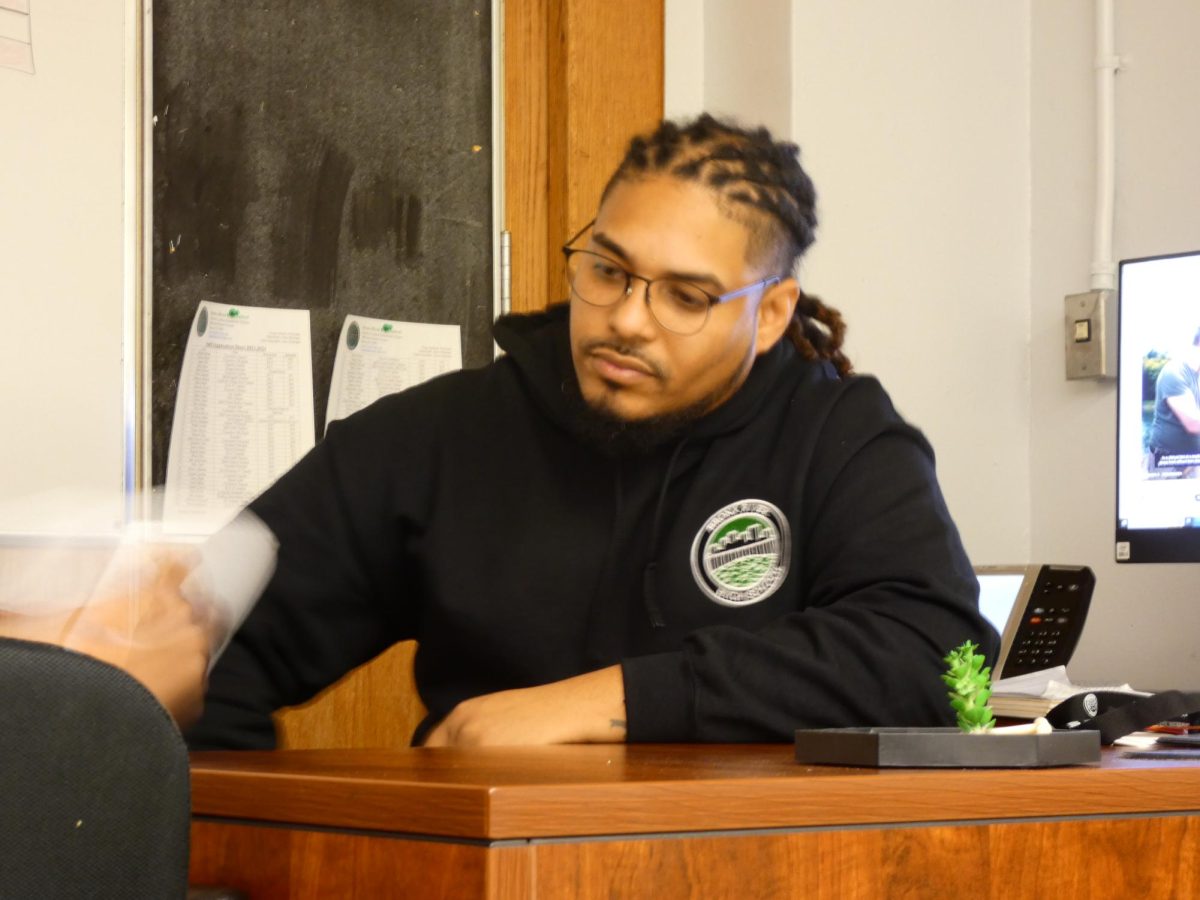






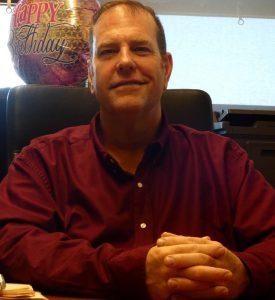
During these uncertain times, families and schools feel the need to protect loved ones from ICE agents spotted around New York City. Bronx River High School principal Gregory Fucheck recently shared his own experience keeping an immigrant student out of harm’s way by serving as the youth’s legal sponsor several years ago.
“I had a student who came from India when he was 14 years old because he lived in extreme poverty and, as everyone who comes into the United States, he came because he wanted better opportunities for himself,” Mr. Fucheck said. “You need to have like $20,000 in your bank account and proof of income, so he did it illegally.”
From India, the young man flew to Moscow and eventually made his way to Cuba. He then went from Ecuador to Colombia.
“This is all with coyotes. He was 14 and unaccompanied, totally alone,” Mr. Fucheck said.
After arriving in Colombia, he then walked through the Darien Gap, the only land path between North America and South America. Upon arriving in North America, he went through Guatemala and southern Mexico to reach the border, taking approximately six months in total.
For the young man, whose name is being withheld to protect his identity, the scariest part of the journey was going through the jungles in Panama. But more than anything, this life-threatening experience taught him perseverance and gave him a sense of self-trust.
“I was walking for five days and it was so dangerous crossing the rivers and climbing,’’ he said. “For the last two days, we had no food, we survived off of water. It’s easy to go hiking, but it’s not easy to go into an actual jungle. There were snakes…and other dangerous animals,’’ he said.
“I remember one time, we were sleeping by the river during the nighttime and early in the next morning, so much more water began to flow over us,’’ he said. “Someone was awake, so he woke us up and warned us. If we were sleeping we would’ve been flooded by the water. I was just worried for when it would end.”
“Now, if I have any problems, no matter how bad, I never give up. It gave me courage to do anything,” he said. This skill has allowed the young man to pursue his own path. “Whatever I think I want to do or I want to get, it’s so easy,” he said. “I’d never done it back in my country because I was too young…. But now I know the rules here.”
Once the young man arrived in the United States, he had to deal with the federal bureaucracy before landing at BRHS.
“As an unaccompanied minor, you went to the jurisdiction of the government,’’ Mr. Fucheck said. “This was back when they had kids in cages because they didn’t have enough food for everyone. Then he went to San Francisco in a detention center until they could find a foster home for him. In California they were full so he flew to New York City, then they set him up in foster care and the very next morning he was sitting right there in that chair [referring to his office] to enroll in Bronx River.’’
The young man, who hasn’t visited his family in India since he left, worries about them.
“They were scared because I was too young to live by myself far away in a different country,’’ he said. “If something happened to me, they wouldn’t be able to help me,” said the young man. “It affects both of us, my family and I. I have one brother, but he’s 30 and he doesn’t live with my mother.”
“I was very close to my mom’s mom, my grandmother. I used to live with her, so I grew up with her, not with my parents. She passed away, my dad passed away, and my grandpa from my dad’s side passed away. I couldn’t visit them or do anything,” he said. “My grandmother passing away sometimes breaks me because I was close to her and I’m never able to see her or talk to her again. After my dad passed away, it’s hard for me to imagine how my mom is living alone, ” he said. “How is she managing everything alone?” is a question he asks himself frequently.
Overcoming a technicality
Joining BRHS in 2016 as a freshman, the young man stayed for his sophomore and junior years. At the beginning of his senior year, an issue that slipped everyone’s minds came back.
“At the beginning of senior year, he was going to turn 18; you cannot be in foster care because you aged out,” Mr. Fucheck said. “They were going to send him to Iowa, and this was October of senior year. Everyone in the school was upset over him leaving because he was a great, wonderful, smart kid who worked hard.”
“He didn’t want to leave, so I asked if he wanted to live with me and he said yes. I had to speak to the DOE Central to let them know I was interested in doing this, and then they all approved it,’’ Mr. Fucheck added.
Technically, Mr. Fucheck wasn’t a foster parent, but a sponsor of an unaccompanied illegal migrant.
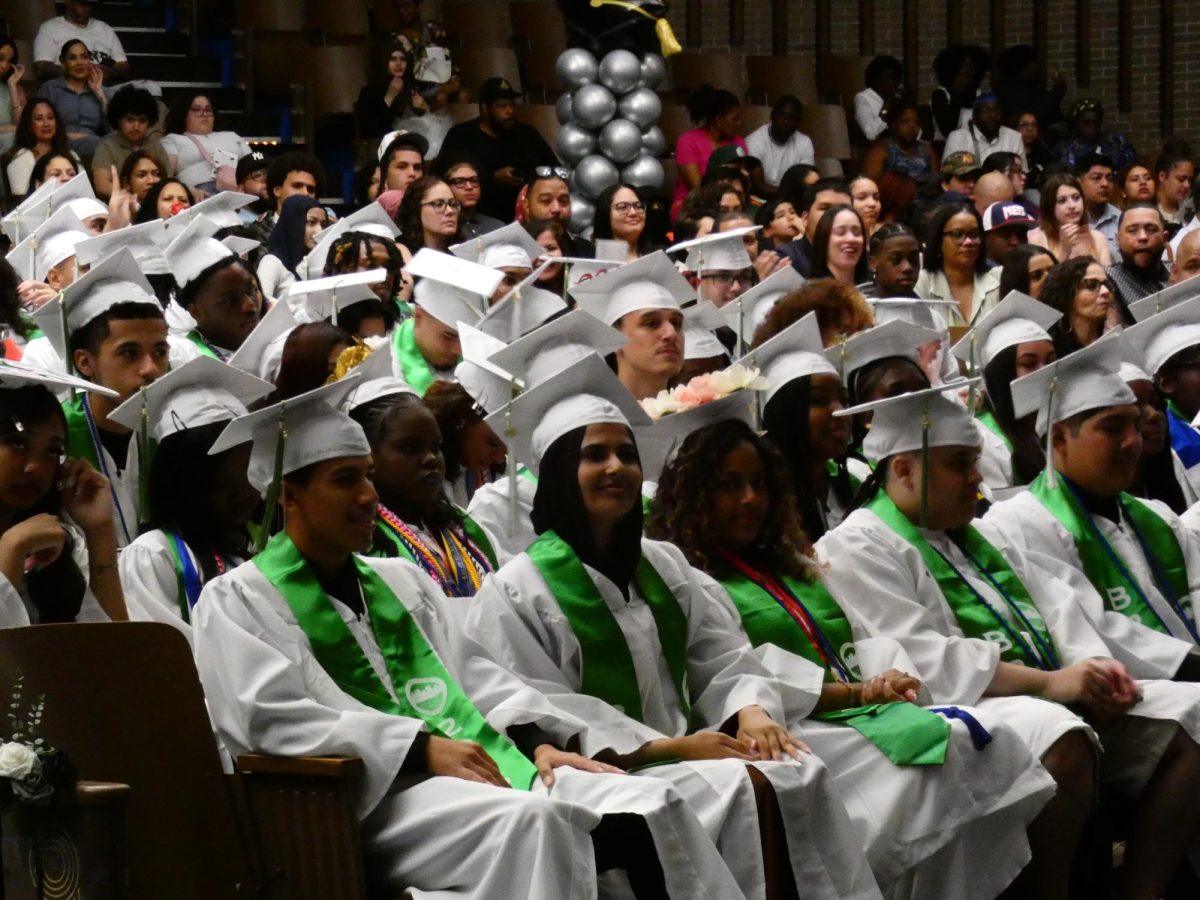
The young man lived with Mr. Fucheck and his family for the entirety of his senior year, which was when the COVID-19 pandemic emerged. After graduating from high school in June, he and Mr. Fucheck reviewed numerous colleges together, but the young man eventually decided on moving to California by himself.
“In San Francisco, California, all the trucking companies were predominantly Indian, and he had people over there,’’ Mr. Fucheck said. “And now he’s been driving trucks in California, so he’s doing extremely well. He got authorization to work in this country, he got a Social Security number and a driver’s license.’’
“He’s paying taxes, all that good stuff,’’ Mr. Fucheck said. “But because of Covid, getting your permanent citizenship is just a series of court cases that just drag on and take forever. He still doesn’t have his permanent citizenship.’’
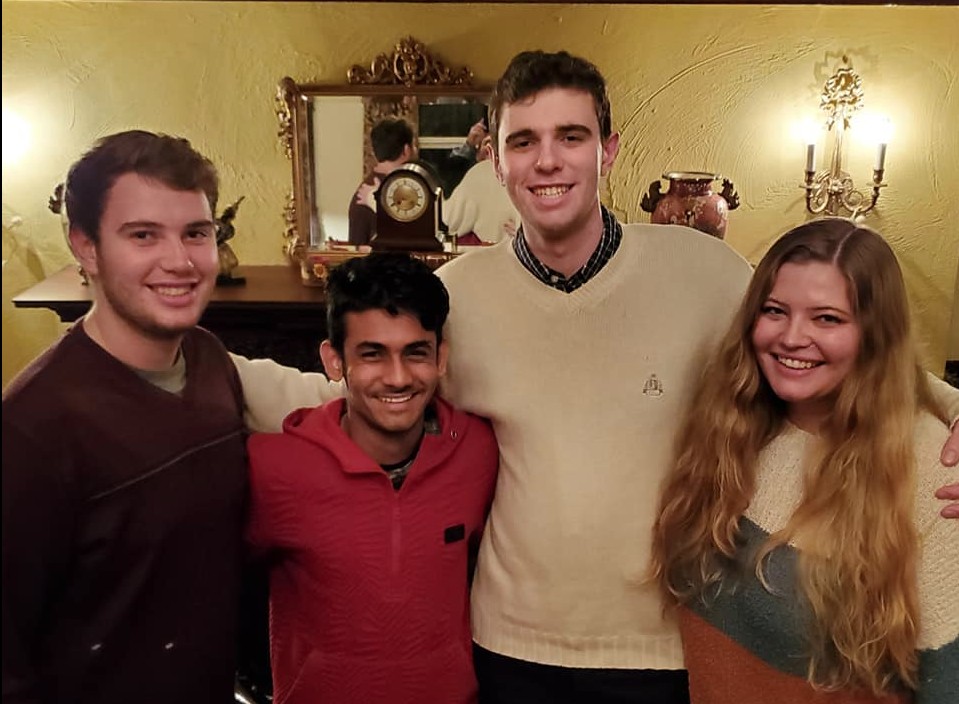
“I miss him very much,” Mr. Fucheck said while showing a picture of him and his family. And during this time of ICE roundups of immigrants who haven’t yet become full citizens, he also worries about the young man’s safety.
The young man owns two trucks and has been paying taxes ever since he started working, but he still hasn’t been able to get his citizenship. And now the government is threatening to revoke driver’s licenses from people who aren’t here legally.
Mr. Fucheck finds the situation ridiculous. “Here’s someone working hard and paying taxes with no criminal record and no problem but they’re still doing this to him,” he said.
Faced with these challenges, the young man plans to hire another person to drive his truck, or he might even switch businesses. Due to his ability to adapt to new environments from a young age, the young man remains hopeful.
Part of his flexibility to assimilate comes from his early years in America, as the young man struggled to adjust to the new culture.
“When I came here, I used to live in a foster family,’’ he said. “I was afraid all the time. They taught me so many things, and I only knew the norms in India.’’
He learned different aspects of American culture that were the complete opposite of the norms he was used to. “I didn’t know American culture or house rules,’’ he said. “ Here, boy or girl, everyone does chores. In India, women are expected to do all of the house chores.’’
His foster family helped him adjust to the new culture. “In the beginning, they used to do chores for me, but little by little, they taught me how to do it by myself,’’ he said. “ I never questioned them. I don’t know how or when I adjusted, I just followed their instructions.’’
While he adjusted to American culture, numerous figures influenced his growth and development through his teenage years. “When I went to live with Mr. Fucheck, I also learned so much stuff. It isn’t just one single person; wherever I go, I learn new things,” he said.
Adjusting to American high school proved a major challenge, but the community felt very welcoming. “In the first six months, I barely spoke any English. At the time, it was really basic. I would sit in class and everything would go over my head. In some classes, like my science class, there were two of my classmates who helped me out for the first time and explained it to me,” he said. “That’s the first time I remember anyone offering me help. Whenever I went to any class, I would always look for them to help me.”
After spending more time at BRHS, the young man began to meet other students with similar experiences. “I made two Bengali friends and they were also new there, and they would ask the teacher for translations to our language, but it didn’t make sense,” he said. “It was the first time I asked a teacher for help, so I gained confidence.’’
Not only did the young man get closer to other students, but he also became more comfortable around teachers. “I started talking with the teachers more and more and got close to them, and I never felt shy anymore,” he said. Trista Norton and Shavanie Ramnarine are two of many teachers he says welcomed him to BRHS with open arms.
When making American friends, the young man explained differences in American and Indian culture. “I would tell them how things are back there at schools, and how much freedom we have here. Back in India, it’s not like that,” he said.
“The teachers had the right to smack you and slap you. Here, students are so chill with the teachers and can joke around with them, and sometimes the students don’t listen. The teachers can’t do anything about it except send them to the principal and tell them about the student. I do really like that part of school here. Teachers can only give you the grade you deserve; they can’t beat you up,” he said.
Looking back and forward
If the young man could do it all over again, he would only do one thing differently. “I would continue my story and go to college there [in New York]. I went to high school there, in Bronx River and after that I didn’t go to college, I chose to work. I came too far now to go back,” he said.
He has found a harmonious balance between his newfound American culture and his Indian heritage. “Nowadays, I live mostly with my Indian community here in California, so I follow my Indian culture with them. When I was in New York, all of the people with me were Americans, so they are the first ones who taught me about American culture,” he said. “I used to listen to Bollywood music, so they would say ‘Dude, why are you always listening to Bollywood music? You should listen to American music.’ I would tell them to try listening to Bollywood music, so my friend listened to a song and he thought it was really nice.’’
“Now it’s so normal for me to go with the American way when I’m with Americans. When I’m with other Indians, I follow my cultural way of doing things. It’s not that hard now, but it was in the beginning.’’
The young man hopes to give back to the communities that supported him through it all. “If they ever need me, I would be the first to do anything for them,’’ he said. “ All of the people around me in my school, in my community, my neighbors, or my friends, whoever is in my life, helped me always even though I wasn’t one of them. That was the biggest thing in my life.’’