










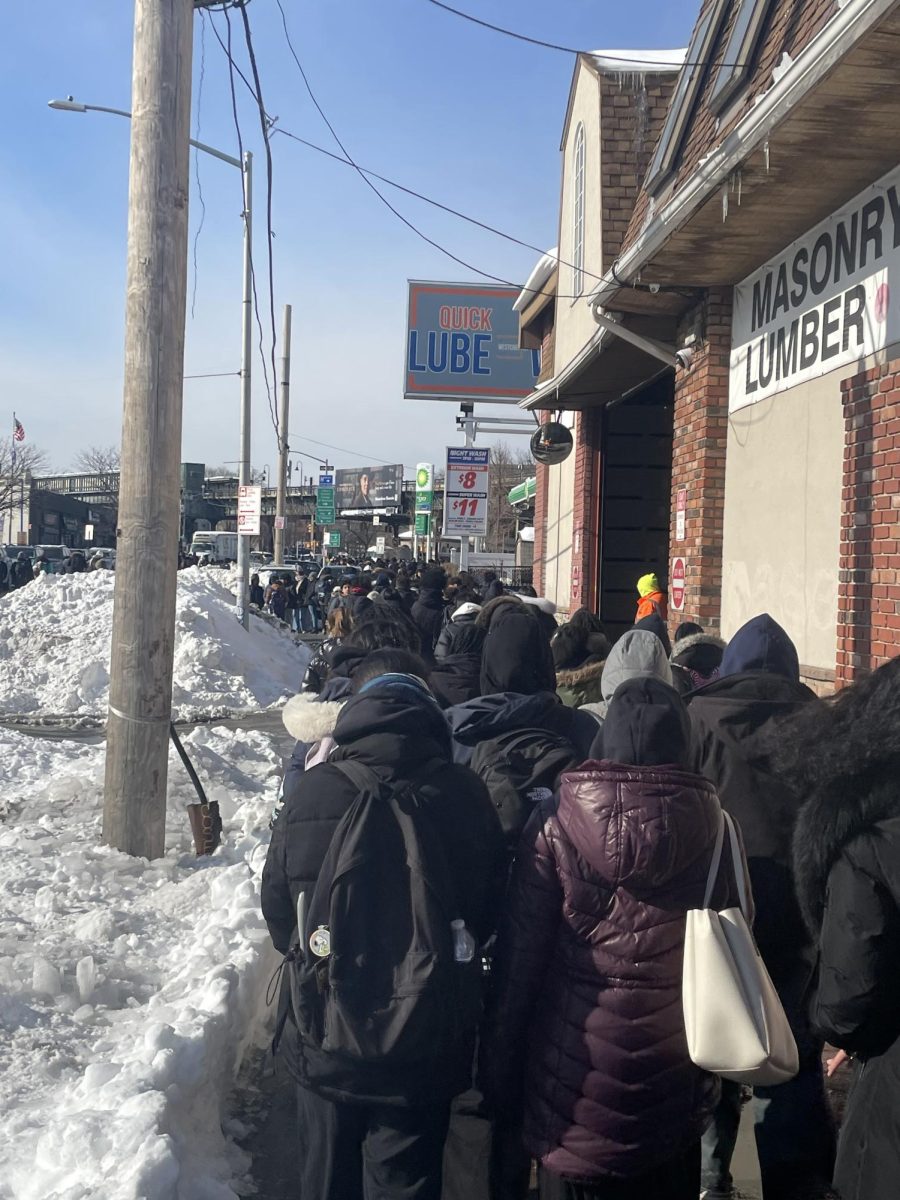
On the first day of the new semester, an anonymous bomb threat sent about 1,900 students and 500 staff members on the Lehman Campus outside in the cold.
At 10:45 a.m. on Jan. 27, a voicemail left on a staff member’s phone threatened to bomb the school. This led to the Lehman campus being evacuated while the NYPD and the bomb squad searched the building.
At around noon, the campus received an all-clear as no threats were found, so people lined up to go back inside. Staff could walk in independently but students had to go through scanning. By 12:30, all students had re-entered the building.
The bomb threat wasn’t an isolated incident: Schools throughout New York state received the same threat, which has led to an NYPD investigation.
Although the campus has numerous fire drills throughout the year, several factors contributed to a chaotic evacuation:
- The snow-covered football field, which is where BRHS usually goes during an evacuation, couldn’t be used. Consequently, BRHS students and staff initially didn’t know where to go.
- With temperatures in the 20s and a wind chill that made it feel closer to 8 degrees, students and staff, especially those without winter coats and boots, struggled to stay warm.
- Snowbanks and icy sidewalks made walking to designated egress locations challenging as some people slipped and fell.
- Students, and in some cases staff, didn’t know where to meet; some students walked as far as Westchester Square and bought snacks from nearby stores.
- The evacuation happened during Bronx River’s lunch time, adding to the confusion since students weren’t with a designated teacher and weren’t trained on how to evacuate without one.
Had the evacuation taken longer, or the threat proved credible, students and staff would have been bussed to another school. In fact, a staff member at PS.72 reported having to clear the school’s first floor to possibly host students and staff until the all clear was given.
With the deep snow and sludge, students complained about others’ behavior and worried about getting hurt. “The cold bothered me a lot, especially with people throwing snow,” said Yerelin Pacheco Taveras, an 11th grader. “I didn’t get hit but the people next to me did.”
Mustapha Drammeh, a 12th grader, noticed other snow-related incidents. “There were a few interesting kids that were climbing the snow mountains and sliding off,’’ he said. “ I was very curious as to why they would do such a thing in this weather. I think they need to be studied as the prime example of what not to be like.”
He also didn’t appreciate the cold weather. “Y’all got us standing outside in the cold for an hour,’’ he said. “I don’t know if you think I’m a snowman or something. The teachers were complaining about the weather with the students too, when the teachers and students are on the same page that’s how you know something’s wrong.”
During the evacuation, two BRHS students got involved in a fight and disrupted the evacuation process. Tene Kelly, an assistant principal, says she was disappointed to hear of such behavior occurring especially during a serious situation. “An incident on top of an emergency is even more dangerous,’’ she said.
Ms. Kelly says that this situation was complicated because it was completely unpredicted. “Our students have never evacuated to a place that’s not the field, so they were going to a new site and it caused a lot of confusion. They weren’t sure where to go or how far to go, even with our staff, the place we practiced was always in the field.”
Like many students, Mustapha initially wanted to find his phone and leave the campus quickly. But because the phones were inside and students didn’t have permission to leave, that wasn’t an option. This created some tense moments as numerous students wanted to go home early – but didn’t want to leave without their phones.
After waiting in the cold, some students started going into stores and delis to buy food and snacks – and to warm up, which isn’t allowed during evacuations. “We’re doing our best to identify the students who went to stores and bought food because that is absolutely prohibited during an evacuation,’’ Ms. Kelly said.
If an event happens again where students are unable to evacuate to the field, Ms. Kelly says that Bronx River students are to walk behind Dunkin’ Donuts, to Little League Place between East Tremont and Westchester avenues.
In future evacuations, Ms. Kelly said students should stay alert and be prepared for any changes that come during an evacuation and to find a staff member nearby. “In emergency situations, factors change,’’ she said. “We practice a certain way but in real time the directions could change.”